
Pasta Bowl vs Cereal Bowl vs Soup Bowl: Pros, Cons, and Recommendations
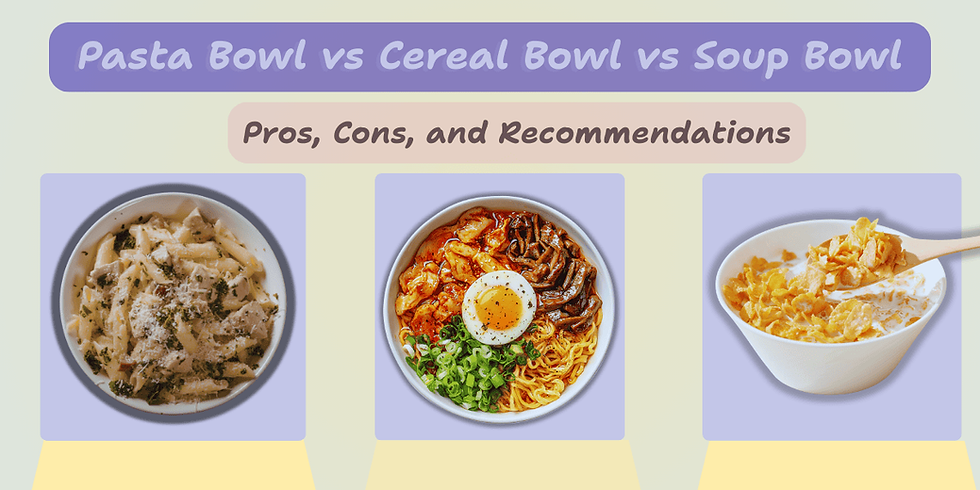
Selecting the right bowl is not a minor design decision. For commercial buyers, hospitality operators, retailers, and private-label brands, bowl selection directly affects customer experience, portion control, food presentation, storage efficiency, and long-term replacement costs. While bowls may appear interchangeable at first glance, pasta bowls, cereal bowls, and soup bowls are engineered for distinctly different use cases.
This guide provides a structured, side-by-side comparison of pasta bowls, cereal bowls, and soup bowls, focusing on functional design, operational suitability, and purchasing considerations. The goal is to help B2B buyers make informed decisions based on real usage scenarios rather than aesthetics alone.
Understanding Bowl Design Fundamentals
Before comparing individual bowl types, it is important to understand the core design factors that differentiate one bowl from another.
Shape and Depth
Bowl depth determines whether a product is suitable for liquid-heavy dishes or dry foods. Shallow bowls favor presentation and surface area, while deeper bowls improve spill control and heat retention.
Diameter and Rim Profile
Wider diameters allow food to be spread and plated attractively, while narrower rims improve containment. Rim angle also affects how easily food can be scooped or twirled.
Capacity and Portion Control
For foodservice operators, bowl volume directly influences portion consistency and cost management. For retailers, standardized capacities simplify product labeling and merchandising.
Pasta Bowls: Designed for Presentation and Surface Area
What Is a Pasta Bowl?
A pasta bowl is typically wide and shallow, with gently sloped sides and a flat center well. Unlike deep bowls, pasta bowls are designed to showcase food rather than contain liquids. Their shape balances the visual appeal of a plate with the practicality of a bowl. Common capacities range from 800 ml to 1,200 ml, depending on diameter and depth.

Pros of Pasta Bowls
The primary advantage of a pasta bowl is presentation. The wide surface area allows sauces to spread evenly, toppings to remain visible, and pasta shapes to sit naturally rather than pile vertically. This makes pasta bowls especially popular in restaurants, cafés, and premium home dining settings.
From a usability standpoint, pasta bowls support fork movement, making them ideal for long noodles such as spaghetti, linguine, or fettuccine. The shallow design also prevents sauces from pooling excessively at the bottom.
For commercial buyers, pasta bowls often serve as multi-use presentation bowls, suitable for grain bowls, risottos, and composed salads.
Cons of Pasta Bowls
The main limitation of pasta bowls is their reduced suitability for liquid-based foods. Soups, broths, and stews can spill easily due to the shallow depth.
Additionally, pasta bowls occupy more horizontal space, which can affect storage density in commercial kitchens or warehouses. Stack height is typically lower compared to cereal or soup bowls, which may influence logistics and shipping efficiency.
Best Use Cases for Pasta Bowls
Pasta bowls are best suited for Italian dishes, plated entrées, grain bowls, and visually driven menu items. They are commonly used in restaurants, boutique hotels, catering services, and premium dinnerware collections.
Who Should Choose Pasta Bowls?
Pasta bowls are recommended for:
Restaurants emphasizing food presentation
Hospitality brands targeting premium dining experiences
Retailers selling curated or lifestyle dinnerware sets
Buyers seeking bowls that function as hybrid plates
Cereal Bowls: The Most Versatile Everyday Option
What Is a Cereal Bowl?
Cereal bowls are the most standardized and widely used bowl type. They feature moderate depth, a rounded interior, and a balanced diameter that supports a wide range of foods. Typical capacities range from 400 ml to 700 ml.
Their design prioritizes everyday functionality rather than specialized plating.

Pros of Cereal Bowls
The biggest advantage of cereal bowls is versatility. They can be used for breakfast cereals, oatmeal, snacks, desserts, side salads, and even light soups.
From a commercial standpoint, cereal bowls are easy to stack, cost-efficient to produce, and familiar to end users. They also perform well in dishwasher and microwave environments, making them suitable for high-turnover settings such as cafeterias and institutional dining.
Cereal bowls are often the backbone of dinnerware collections because they appeal to both household consumers and professional buyers.
Cons of Cereal Bowls
While versatile, cereal bowls are not optimized for presentation-focused dishes. They lack the surface area of pasta bowls and the depth of soup bowls, making them a compromise solution rather than a specialized one.
For restaurants with visually driven menus, cereal bowls may appear too utilitarian for plated entrées.
Best Use Cases for Cereal Bowls
Cereal bowls are ideal for breakfast service, casual dining, side dishes, and multi-purpose kitchen use. They are commonly used in homes, hotels, schools, and workplace cafeterias.
Who Should Choose Cereal Bowls?
Cereal bowls are recommended for:
Bulk buyers seeking cost-effective versatility
Retailers targeting mass-market consumers
Hospitality operations with diverse menus
Buyers prioritizing storage efficiency and replacement ease
Soup Bowls: Built for Liquids and Heat Retention
What Is a Soup Bowl?
Soup bowls are deep-profile bowls designed specifically for liquid or semi-liquid foods.
They often feature vertical sides and may be paired with underlines or saucers in formal dining environments. Capacities typically range from 600 ml to 900 ml.
The defining feature of a soup bowl is containment rather than presentation.

Pros of Soup Bowls
Soup bowls excel at heat retention and spill prevention. Their depth keeps liquids contained and allows soups to remain warm for longer periods.
They are comfortable for spoon-based eating and are well-suited for broths, stews, chowders, and noodle soups. In hospitality settings, soup bowls signal menu structure and course separation.
For B2B buyers, soup bowls are often standardized, making them easy to reorder and replace over time.
Cons of Soup Bowls
Soup bowls are less flexible than cereal bowls and less visually dynamic than pasta bowls. For solid-heavy meals, their depth can make food harder to access and less visually appealing.
They may also feel oversized when used for non-soup items, limiting cross-functional use.
Best Use Cases for Soup Bowls
Soup bowls are best suited for liquid-based dishes, formal dining courses, and menus where soups are a consistent offering.
Who Should Choose Soup Bowls?
Soup bowls are recommended for:
Restaurants with dedicated soup courses
Hotels and banqueting operations
Institutional dining facilities
Buyers requiring reliable heat-holding performance
Pasta Bowl vs Cereal Bowl vs Soup Bowl: Direct Comparison
When comparing these three bowl types, the differences become clearer when viewed through operational needs rather than personal preference.
Pasta bowls prioritize surface area and presentation, cereal bowls emphasize versatility and efficiency, and soup bowls focus on containment and heat retention.
Cereal bowls are generally the most flexible option, while pasta and soup bowls perform best when used for their intended purposes.
Choosing the Right Bowl for Commercial and B2B Buyers
Align Bowl Selection with Menu Structure
Buyers should evaluate which dishes appear most frequently on their menu. Operations focused on plated entrées benefit from pasta bowls, while high-volume breakfast or casual dining operations benefit from cereal bowls. Soup-heavy menus require dedicated soup bowls to maintain service quality.
Consider Storage and Logistics
Stackability, case pack quantities, and pallet efficiency matter for warehouses and distributors. Deeper bowls often stack more efficiently, while wider bowls require more shelf space.
Material and Durability Considerations
Ceramic, porcelain, and stoneware each offer different durability and weight profiles. Buyers should consider chipping resistance, glaze performance, and long-term replacement availability when selecting bowl types.
Branding and Private Label Opportunities
Bowls are highly visible touchpoints. Pasta bowls support premium branding, cereal bowls support broad market appeal, and soup bowls reinforce classic dining aesthetics.
Recommendations by Buyer Type
For restaurants and cafés, a combination of pasta bowls and soup bowls often delivers the best functional coverage. For hotels and institutional buyers, cereal bowls provide flexibility while soup bowls support structured meal service.
Retailers and wholesalers benefit from offering all three types, clearly segmented by use case, to meet diverse buyer expectations.
Conclusion
Choosing between pasta bowls, cereal bowls, and soup bowls is not about selecting a “better” bowl, but about selecting the right tool for the job. Each bowl type serves a specific function, and understanding those differences allows commercial buyers to optimize dining experience, operational efficiency, and long-term value.
For B2B buyers, the most effective dinnerware strategy is often a balanced assortment that aligns with menu requirements, storage capacity, and customer expectations. Making informed bowl selections today reduces replacement costs, improves consistency, and strengthens brand presentation over time.
Read this blog 11 Best Selling Ceramic Products
Frequently Asked Questions (FAQ’s)
Which bowl type is best for restaurants with a diverse menu?
For restaurants offering a mix of pasta, soups, and casual dishes, a combination of cereal bowls and pasta bowls provides the best balance between versatility, presentation, and operational efficiency.
Are pasta bowls suitable for bulk foodservice purchasing?
Yes, pasta bowls are suitable for bulk purchasing when menu presentation is a priority, though buyers should account for larger storage space and slightly higher unit costs compared to standard cereal bowls.
Can cereal bowls replace soup bowls in commercial settings?
Cereal bowls can handle light soups, but for consistent soup service, dedicated soup bowls are recommended due to better depth, spill control, and heat retention.
What should B2B buyers prioritize when sourcing bowls from manufacturers?
B2B buyers should prioritize standardized sizing, durability, Stackability, consistent glaze quality, and long-term availability to ensure easy reordering and uniform presentation across locations.


Comments